I My Insight Today
HVAC / Apr 17, 2026 / 9 min read

Carrier Paid HVAC Training: A Practical Guide to Training Paths, Costs, and Career Considerations in the U.S.

Learn how Carrier paid HVAC training and other HVAC training programs near you may work, including costs, certifications, paid training options, and key factors to compare before choosing a path.
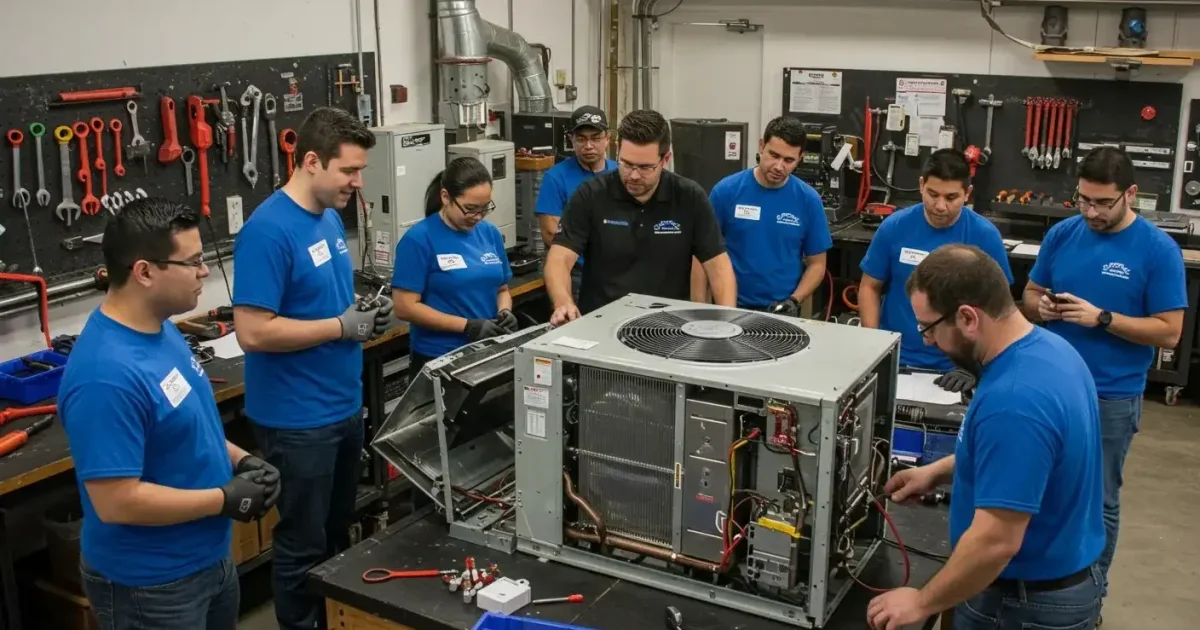
Carrier Paid HVAC Training: A Practical Guide to Training Paths, Costs, and Career Considerations in the U.S.

Many people searching for hvac training programs near me, HVAC Training Near Me, or hvac technician training programs are trying to answer a practical question: what is the most realistic path into HVAC work, especially if they want a program that is short, skills-focused, or connected to paid work? In the U.S., HVAC technicians typically install, maintain, and repair heating, ventilation, air conditioning, and refrigeration systems used in homes, schools, hospitals, and commercial buildings. The field is large, and the occupation continues to show steady demand. The U.S. Bureau of Labor Statistics reports about 425,200 jobs in 2024, a median annual wage of $59,810, and projected employment growth of 8% from 2024 to 2034, which is faster than average.

The phrase Carrier paid HVAC training can mean different things depending on the context. Some searchers may be looking for training connected to the Carrier brand, while others may be looking more broadly for employer-sponsored or funded HVAC training. Officially, Carrier University offers HVAC training courses in areas such as technical service, equipment, software, and system design for technicians, contractors, and other industry professionals. At the same time, many entry paths into the trade across the U.S. come through technical schools, community colleges, apprenticeships, or employer-led training rather than through a single national program structure.

This guide explains how HVAC training usually works, what “paid training” often means in practice, where certifications fit in, and what factors matter when comparing options such as hvac training programs in my area, Funded Hvac Training, or other entry-level HVAC training routes connected to paid work.

What HVAC training usually prepares you to do

HVAC training is designed to help learners develop the technical foundation needed to work with heating and cooling systems. According to the Bureau of Labor Statistics, common duties include installing, maintaining, and repairing HVACR systems, wiring electrical components, inspecting and testing equipment, repairing or replacing defective parts, and keeping records of work performed. HVAC technicians also need to follow regulations for handling refrigerants properly.

Because the work can involve residential systems, commercial equipment, refrigeration, controls, airflow, and electrical diagnostics, training programs differ in scope. Some programs focus on basic residential service, while others move into commercial systems or specialized troubleshooting. Carrier University, for example, describes a course catalog that includes HVAC design, service, and technical development topics, which suggests that branded training may be especially useful for skill development within specific equipment ecosystems or professional tracks.

For someone comparing HVAC Skills Training options, the key point is that a program should match the kind of work they want to do. A short, entry-level certificate may be enough to build basic readiness for helper or junior technician roles, while more advanced training may be more relevant for experienced technicians, commercial work, or systems diagnostics. The best choice often depends on whether the goal is fast entry, long-term advancement, or brand-specific expertise.

What “paid HVAC training” often means

The phrase paid training programs can sound simple, but it can refer to several different models. In some cases, it means an employer hires trainees and pays wages during structured onboarding or apprenticeship-style learning. In other cases, it may refer to publicly supported workforce programs, grants, or training that reduces out-of-pocket costs rather than paying a wage directly. Registered Apprenticeship is one formal pathway used in construction-related fields, and Apprenticeship.gov describes it as a way for employers to recruit, train, and retain workers for high-demand jobs.

That distinction matters for people searching terms such as Funded Hvac Training or beginner-friendly HVAC training linked to employment. “Funded” may mean tuition assistance, workforce support, or employer reimbursement. “Paid” may mean hourly wages while learning, but not every training provider uses the same definition. As a result, it is useful to verify whether a program is classroom-first, apprenticeship-based, or employer-sponsored before assuming how compensation works.

Some searchers also use phrases like 7-week Paid Hvac Training. In practice, program length varies widely by provider and by training model. The Bureau of Labor Statistics notes that HVAC technicians typically need a postsecondary nondegree award and then a lengthy period of on-the-job training to reach competency. That means a short course may provide an entry point, but it usually does not replace hands-on learning after hire.

Common training paths in the U.S.

For people searching hvac technician training programs or Hvac technician training in my area, there are usually three main paths.

The first is a technical school or community college certificate. BLS states that HVAC technicians typically need a postsecondary nondegree award, which aligns with many certificate-based programs. These programs often provide structured instruction in safety, electrical basics, refrigeration, controls, and troubleshooting. They may be useful for people who want a defined classroom environment before entering the workforce.

The second path is apprenticeship. Apprenticeship.gov identifies construction apprenticeships as a major workforce channel and notes strong participation in the construction industry. This path may appeal to people who want a work-based route that combines skill development with wages and recognized credentials. Apprenticeship-based options are often relevant for those specifically searching for paid training programs rather than tuition-based schooling.

The third path is employer or manufacturer training. Carrier University is an example of a manufacturer-backed training resource, offering courses in HVAC service, design, and technical development. This kind of training can be valuable when a job involves particular equipment families, systems, or workflows. However, learners should confirm whether a branded training resource is intended for complete beginners, working technicians, or dealer and contractor networks.

Certifications, licensing, and compliance issues

One of the most important practical issues in HVAC training is refrigerant handling. The U.S. Environmental Protection Agency states that technicians who maintain, service, repair, or dispose of equipment that could release ozone-depleting refrigerants must hold Section 608 Technician Certification. The EPA also notes that this requirement applies to many substitute refrigerants, including HFCs, and that certification is obtained by passing an EPA-approved test through an approved certifying organization. Section 608 credentials do not expire.

This means that anyone evaluating HVAC Training Near Me should check whether the program prepares students for EPA Section 608 testing if refrigerant-related work is part of the intended job path. A training program that does not address this requirement may be less practical for entry into many technician roles.

Licensing is another factor. BLS notes that HVAC technicians may need a license or certification, which means requirements can vary depending on role and location. Because rules are not identical across states or municipalities, local verification is important when comparing hvac training programs in my area.

How to evaluate a program before enrolling

When reviewing training options, it helps to focus on practical questions rather than marketing language.

First, look at the training format. BLS notes that HVAC work takes place in homes, schools, hospitals, and other buildings, often in cramped spaces, outdoors, or under demanding conditions. A useful program should prepare students for both technical tasks and the realities of field work.

Second, review the program’s connection to employment. Because BLS indicates that the occupation typically involves long-term on-the-job training, a program that includes labs, externships, apprenticeships, or employer ties may provide a smoother transition than one built only around classroom content.

Third, check whether the curriculum covers the basics clearly: electrical systems, troubleshooting, airflow principles, refrigerant handling, safety, and system components. If the program is associated with a manufacturer, such as Carrier, clarify whether the instruction is broad foundational training or equipment-specific development. Carrier University’s official materials emphasize service, design, and technical development, which may be highly useful, but the fit depends on the learner’s starting point.

Fourth, verify cost and support details carefully. A search phrase such as Funded Hvac Training does not always mean the same thing as wages during training. Some programs reduce tuition, some connect learners to workforce support, and some pay employees while they train. Reading the program terms closely can prevent misunderstandings.

Career outlook and what it means for decision-making

HVAC remains a notable skilled-trades career path in the U.S. BLS reports projected growth of 8% from 2024 to 2034 and about 40,100 openings per year on average over the decade. That does not guarantee identical opportunities in every local market, but it does suggest continued need for qualified workers across residential and commercial environments.

Pay data also helps frame expectations. BLS reports a 2024 median annual wage of $59,810, with variation across industries and experience levels. The lowest 10 percent earned less than $39,130, while the highest 10 percent earned more than $91,020. These numbers show why many searchers are interested in training routes that shorten the transition from learning to paid work, but they also reinforce the value of realistic expectations: entry-level earnings, advancement speed, and specialization opportunities can differ significantly by employer, region, and credential mix.

Conclusion

For people searching hvac training programs near me, hvac technician training programs, or Hvac technician training in my area, the most useful comparison is not just price or speed. It is whether a program provides a credible pathway into field-ready skills, regulatory compliance, and employment. In the U.S., HVAC technicians typically enter through postsecondary training, apprenticeship, or employer-supported learning, and many continue building skills on the job over time.

A search for Carrier Paid HVAC Training may lead some users toward manufacturer-backed learning resources, while others may really be seeking broader paid or funded entry routes. Carrier University does offer official HVAC training resources and course schedules, but prospective learners should still confirm audience level, training scope, certification preparation, and whether any compensation or funding applies. Careful comparison is usually more useful than relying on a single phrase or headline.

Disclaimer

This information is general in nature and may vary by provider, location, employer, certification requirements, and eligibility rules. Training format, cost, duration, and compensation arrangements should be verified directly with the program or employer.

References