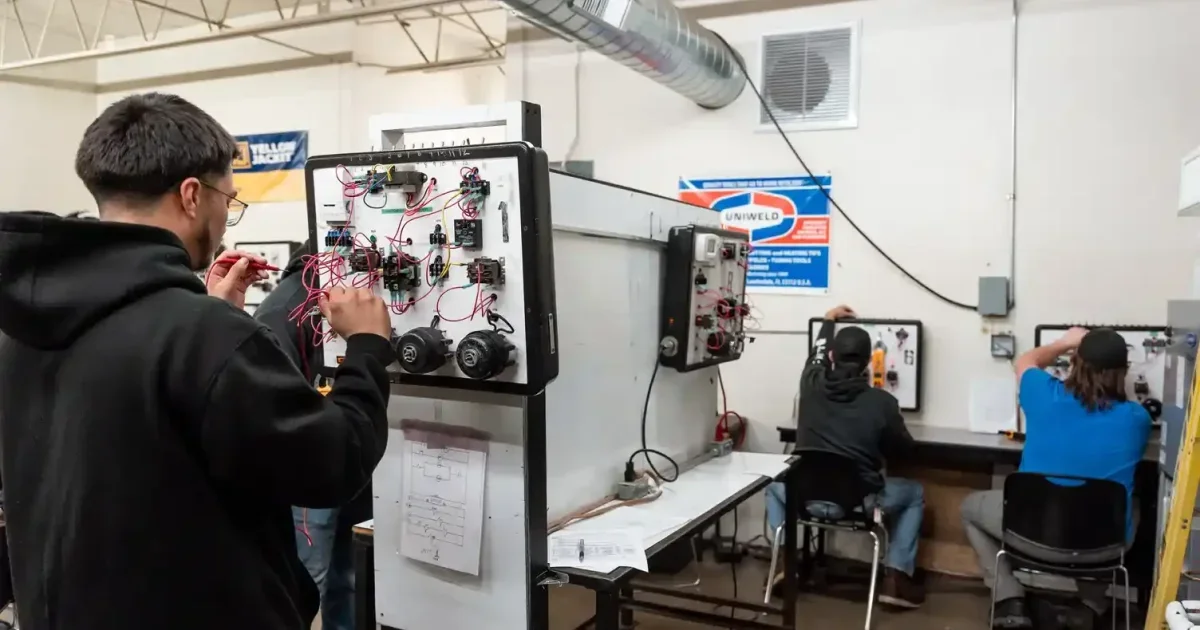
hvac technician training in my area should look beyond the phrase “paid training” and ask practical questions: Is the training classroom-based, field-based, or both? Is the program intended for complete beginners? Are wages offered during training? Is there a pathway to certification or advancement?What HVAC Training Usually Covers
Most HVAC training programs begin with fundamental technical knowledge. That normally includes basic electricity, tools and meters, safety procedures, wiring diagrams, refrigeration cycle concepts, airflow, heating systems, controls, troubleshooting, and preventive maintenance. Carrier’s official training catalog shows that manufacturer-linked training often extends into more specialized subjects such as troubleshooting, rooftop units, chillers, controls, and modeling tools.
For beginners, the early goal is not mastery of every system type. It is usually to develop enough core knowledge to work safely, recognize common equipment layouts, understand service procedures, and support licensed or experienced technicians. That is why many entry-level programs focus on skill-building rather than narrow brand specialization at the start.
Searchers using terms like HVAC Skills Training are often looking for programs that are practical rather than heavily academic. A useful training path generally includes some combination of hands-on lab work, supervised field exposure, and evaluation through exams or performance checks. The best fit depends on whether the learner wants the fastest route to entry-level work, a more formal credential, or a long-term pathway into commercial service, controls, refrigeration, or supervisory roles.Certifications and Credentials to Understand
One of the most important credentials in HVAC is EPA Section 608 Technician Certification. The U.S. Environmental Protection Agency states that technicians who maintain, service, repair, or dispose of equipment that could release ozone-depleting refrigerants must be certified under Section 608. The certification is obtained by passing an EPA-approved test, and the credential does not expire.This matters because many entry-level job seekers assume that completing a training program is enough by itself. In reality, employers may still expect a trainee or new technician to obtain the EPA certification needed for refrigerant-related work. When comparing hvac training programs near me, it is often useful to check whether the program prepares students for the Section 608 exam or includes testing support.Another credential frequently discussed in the field is NATE. NATE describes itself as the nation’s largest nonprofit certification organization for HVACR technicians, and it offers entry-level certificates as well as more advanced certifications. Its Ready-to-Work certificate is specifically aimed at people entering the HVACR field with little to no formal education or training, while its professional certification tracks are intended for technicians with more practical experience.
These credentials serve different purposes. Section 608 is tied to legal refrigerant-handling requirements. NATE-related credentials are more about demonstrating knowledge and professional development. A beginner does not always need every credential immediately, but understanding the sequence can help when evaluating training options.
How Long Training Can Take
One reason short-form queries like 7-week Paid Hvac Training are common is that many career changers want a faster entry point than a multi-year degree. Training length varies widely. Some certificate programs can be completed in less than a year, while apprenticeship pathways may last much longer because they combine paid work with progressive skill development. CareerOneStop’s local training finder shows HVAC-related certificate options that can range from short-term formats to longer technical programs, depending on school and location.A shorter program may work well for someone whose immediate goal is to qualify for helper, installer assistant, or trainee roles. A longer program may be more suitable for someone who wants a broader technical foundation before entering the job market. Neither route is automatically better. The decision often depends on budget, schedule, prior mechanical experience, and whether the learner values immediate income over a longer classroom phase.
Job Outlook, Pay, and Advancement
HVAC continues to attract attention because it combines practical work with a relatively clear progression path. The Bureau of Labor Statistics reports that heating, air conditioning, and refrigeration mechanics and installers had a median annual wage of $59,810 in May 2025, with projected employment growth of 8% from 2024 to 2034. BLS also notes that demand is supported by climate-control needs in homes and commercial buildings, plus work related to system installation, maintenance, and replacement.Earlier BLS occupational wage data also show a spread between lower and higher earners, which helps explain why skill level matters. As technicians gain experience, certifications, troubleshooting ability, and familiarity with commercial or specialized systems, pay can increase meaningfully.
That does not mean every entry-level job will start at high pay. For beginners, the more realistic view is that training opens access to a trade where earnings often improve with time, competence, licensing status where applicable, and the type of employer. Someone evaluating paid training programs should therefore consider not just the initial wage but also the long-term skill ladder: residential service, installation, refrigeration, controls, building automation, commercial systems, and team leadership.How to Evaluate HVAC Training Programs Near You
When comparing hvac technician training programs or hvac training programs in my area, it helps to use a checklist.First, verify whether the program is beginner-friendly. Some manufacturer or advanced technical courses are best suited to existing technicians rather than people starting from zero. Carrier University’s catalog is broad and valuable, but course relevance will depend on the learner’s experience level and career goal.
Second, check whether the training includes hands-on work, not just theory. HVAC is a field where tool use, equipment familiarity, safety habits, and troubleshooting method matter.
Third, ask whether the path supports Section 608 preparation, because refrigerant certification is a practical requirement for many roles.
Fourth, ask whether the training is paid, funded, tuition-based, or partially reimbursed. The phrase Funded Hvac Training can sound similar across ads and listings, but actual financial structure varies. In some cases, the employer pays wages. In others, the employer reimburses tuition after a period of employment. In still others, the student pays first and seeks aid separately.Fifth, ask what happens after completion. Is there job placement support, a hiring relationship with local contractors, or only a certificate of attendance? A training program is usually more useful when it connects clearly to entry-level roles and skill progression.
Conclusion
For many U.S. job seekers, Carrier HVAC Paid Training is best understood as part of a broader search for structured HVAC entry pathways rather than a single universal program model. Carrier does offer official HVAC training through Carrier University, but searchers interested in HVAC Training Near Me, paid training programs, or hvac technician training in my area should still evaluate whether a given option is designed for beginners, whether it includes hands-on learning, whether it supports EPA certification preparation, and whether compensation is offered during training.A careful approach usually works best. Compare local schools, apprenticeships, and employer-sponsored options. Review the training format, cost structure, certifications, and likely first job outcomes. HVAC can be a practical skilled-trade path, but the strongest choice is usually the one that matches a learner’s experience level, schedule, financial situation, and long-term goals.
Disclaimer
This information is general in nature and is provided for educational purposes only. Training formats, compensation, certifications, costs, licensing expectations, and eligibility requirements may vary by provider, employer, state, and local market.