Autism Social Skills: How to Improve Social Interaction
Developing autism social skills can be challenging, but with the right support, autistic children can learn to connect with others more easily. Many struggle with understanding body language, making eye contact, or knowing how to start a conversation. These difficulties don’t mean they can’t form relationships—they just need guidance that suits their needs. By using simple strategies and providing a supportive environment, parents and caregivers can help strengthen social skills over time.
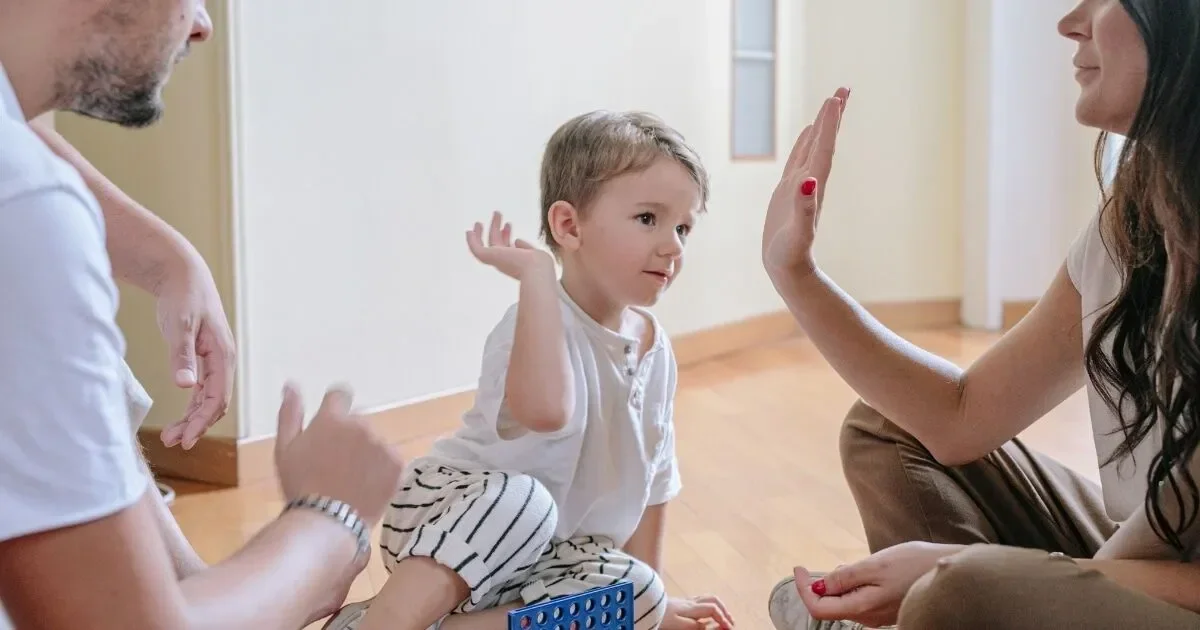
What are social skills?Social skills are the abilities that help children communicate, interact, and build relationships with others in a socially appropriate way.These skills include verbal and nonverbal communication, such as:
These skills include verbal and nonverbal communication, such as:
making eye contact,
understanding body language,
taking turns in conversation, and
recognizing social cues.
When children develop strong social skills, they can form friendships, express their thoughts and emotions effectively, and engage in everyday interactions with confidence.
These abilities play a crucial role in helping them navigate different social situations, from casual conversations to group activities, setting the foundation for meaningful connections.
Autism and social skills
It’s a common misconception that children with autism do not make friends because they are anti-social. This is not the case. Children with autism want to make friends and talk to others, but they don’t always know how to do it properly.
They often struggle with being able to maintain eye contact and understand social interaction.
When someone says a child lacks social skills, it means they do not display expected behavior around other children. This makes it harder to make friends.
For instance, an autistic child might take another child’s toy without asking for permission. This is viewed as negative behavior by most people, but a child with autism might not understand.
What social skills are affected by autism?
Teaching a child with autism social skills can be a challenge sometimes. This is mainly because one of the key symptoms of autism spectrum disorder (ASD) is a lack or delay in social and communication skills.
The autism symptoms that affect a child’s social skills are:
Delays in speech development
Inability to read non-verbal cues
Failure to understand the feelings of others
Difficulty understanding jokes, sarcasm, or teasing
Unable to carry on a conversation
Repeats words and phrases over and over (echolalia)
Gives unrelated answers to questions
Looking at these symptoms, it is understandable why autism and social interaction can be a challenge. This is why autistic children might not make friends easily at school. At home, playing with their siblings can seem next to impossible.
What social skills are important for autism?
Children with autism need the same level of social skills as their neurotypical peers. Social skills are important for children to develop confidence, form friendships, and get along with others.
Author and autism advocate Temple Grandin strongly believes children should be taught social skills to help them become more independent.
In an Autism Parenting Magazine interview, Grandin explains that too much alone time for a child on the spectrum is not advisable.
“I had a tendency to become a recluse in my room, and that wasn’t allowed. If I wanted to play outside for hours experimenting on my kite designs then that was fine. I was not allowed to stay in my room,” she said.
According to Grandin, social skills are not just important for building relationships, but to develop life skills that kids need as adults. “They need to know how to show up on time, learn discipline and responsibility,” she said.
On a social level, a list of social skills for autism should include, but not be limited to:
Playing with others (sharing, taking turns, pretend play)
Talking to others
Managing emotions
Solving problems
Once these basic skills are identified, it is easier to develop a plan to improve a child’s social skills.
Social skills therapy for autism
Parents can seek help from therapists to teach their children on the autism spectrum useful social skills. Although these experts come from different backgrounds, they share the knowledge and competencies needed to help develop autism social skills.
Therapists use different teaching strategies to help students cope with common social situations. One strategy is to teach a child with autism how to play, talk, share, and work with other children their age.
Some sessions are also conducted in a group setting to encourage children to apply what they have learned. Most schools with autism programs also offer social skills training.
Development strategies and social skills activities for autism
Therapy sessions and expert interventions can improve the social skills of children with autism. But, it is equally important that parents and caregivers reinforce training at home to achieve the best results.
Here are some strategies that parents can use to teach social skills.
Role-play
Role-playing can help a child learn expected and unexpected behavior in a given scenario. For instance, if a child is going to school for the first time, role-play can help them practice the actual event of going to school.
Play games together
Before a child is sent out to play with others, it’s a good idea to “practice” playing with a parent or sibling. Parents can explain how the game works and observe the child’s behavior throughout the game.
Some games to play are:
Kicking a ball back and forth
Simon Says
Hide and Seek
Simple board games like Jenga or Connect Four
Playing games teaches children the importance of rules, taking turns, and being a good sport.
Watch videos or observe othersIf a child is anxious about social activities, such as going to the dentist, you can watch videos of people or kids during a dental visit. It is helpful if you explain to the child what to expect when they arrive at the clinic.
This can also help the child recognize basic courtesy skills, like greeting the doctor and following instructions.
Social storiesA social story is a story with a social element. These stories further illustrate how people behave when interacting with others and the best ways to solve problems together.
are great if you want a child with autism to:
Develop social skills (sharing, asking for help, saying thank you)
Understand the feelings of others
Understand one’s own feelings
Cope with unexpected changes
Regulate emotions
There are many books that teach social skills to children with autism spectrum disorders. If your child is an avid reader, then this approach is the most sensible way to go. Parents can also learn to write their own social stories based on their child’s behavior.
A social story is a story with a social element. These stories further illustrate how people behave when interacting with others and the best ways to solve problems together.
are great if you want a child with autism to:
Develop social skills (sharing, asking for help, saying thank you)
Understand the feelings of others
Understand one’s own feelings
Cope with unexpected changes
Regulate emotions
There are many books that teach social skills to children with autism spectrum disorders. If your child is an avid reader, then this approach is the most sensible way to go. Parents can also learn to write their own social stories based on their child’s behavior.
To do this, parents should familiarize themselves with the basics of creating social stories, including:
choosing the types of sentences to be used,
creating characters, and
identifying the purpose of the story.
Autism social skills in the classroom
Children with autism can learn from their neurotypical peers when it comes to social skills. If the child with autism is not yet exposed to children his age (who are not on the spectrum), then a parent can arrange playdates to make this happen.
Some autistic children can learn a skill within a certain environment but will stop applying the skill when the situation changes. Parents, teachers, and caregivers must all work together to help a child with autism become regular with their ability to socialize.
For school-age children with autism, attending school itself is a challenge they face every day. In addition to academic challenges, they also deal with other children in their class.
Teachers can help children with autism with their social skills by:
Making the classroom comfortable (no loud noise or bright lights)
Encourage the child to take part in activities
Pick topics and toys that they might have a great interest in
Model good social skills
Practicing autism social skills at home
Home is where most children spend their time. Often, it is where they learn basic social skills.
Parents and caregivers are expected to reinforce what children learn from social skills training or school. Talking to the child’s therapist or teacher can help parents create their own ways to teach social skills at home.
Games and visual aids can be used to help a child learn a variety of skills, including:
reading emotions,
communicating with others,
understanding social rules, and
solving problems.
The power of social skills in everyday life
Social skills are vital to everyday life, enabling children to build meaningful relationships, navigate school environments, and eventually succeed in their adult lives.
Developing these skills may initially seem challenging for children with autism, as they might not naturally pick up on social cues or understand the nuances of interpersonal communication.
However, this doesn’t mean these skills can’t be learned. With the right guidance, structured teaching methods, and the support of qualified experts, children with autism can gradually improve their social abilities.
FAQs
Q: Can you be autistic and social?
A: Many autistic individuals can be social, though their social interactions might differ from neurotypical norms. Socializing for autistic people may require more effort, structure, and understanding of social cues.
Q: How does autism affect social skills?
A: Autism can impact the ability to understand and respond to social cues, such as body language or tone of voice. This can lead to challenges in forming relationships and navigating social situations.
Q: What are the social traits of autism?
A: Common social traits of autism include difficulty with back-and-forth conversations, challenges in understanding nonverbal communication, and a preference for solitary activities. Autistic individuals may also struggle with empathy or recognizing social norms.
Q: What are the social strengths of autism?
A: Autistic individuals often exhibit strengths such as honesty, loyalty, and a unique perspective on social situations. They may also focus deeply on specific interests, which can lead to meaningful and passionate social interactions in those areas.